



HorizonVale Holdings HorizonVale Holdings BV
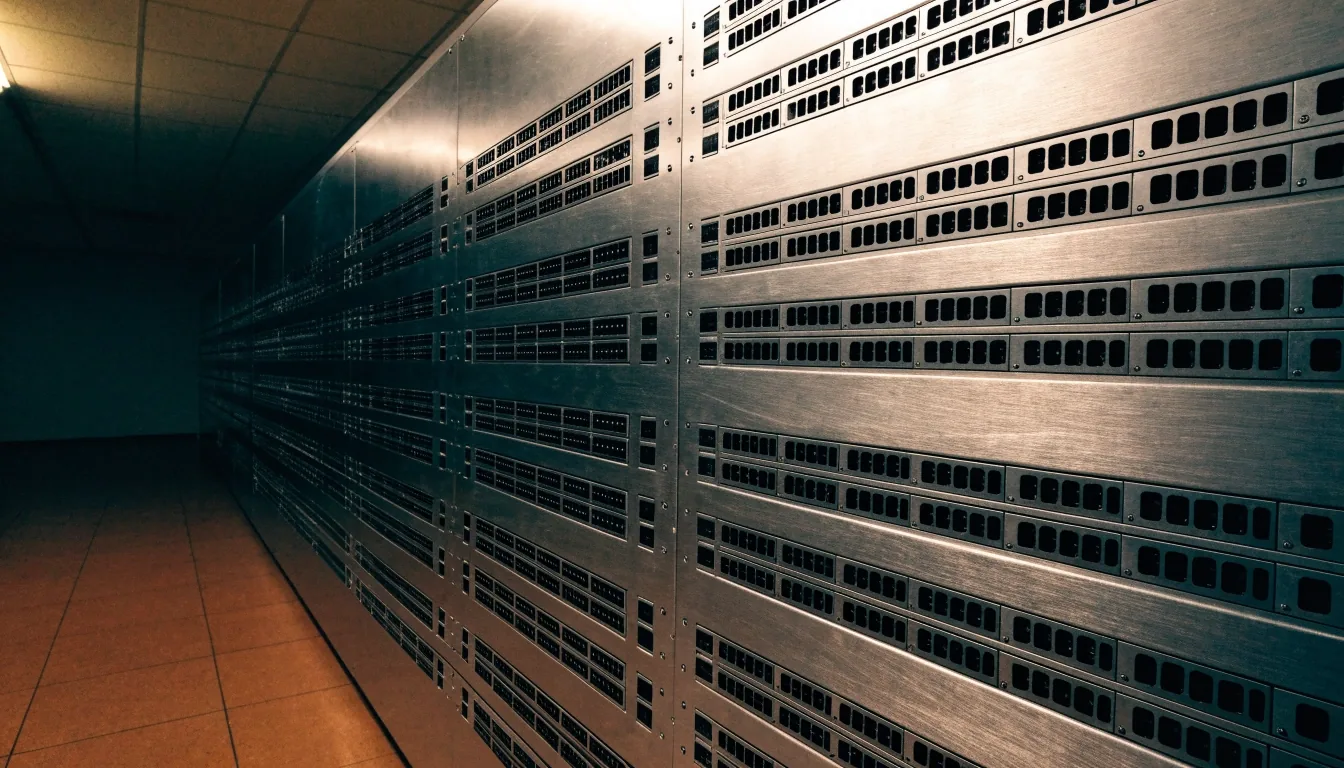
A Belgian integration workshop wall at four in the afternoon — a brushed-steel rack wall with even rows of unlit ports and a warm coated-tile floor

System integration & custom applications

We draw the cable between your systems.

HorizonVale Holdings builds custom business applications and the integration layer under them, so a scheduling tool, a portal or a warehouse app can read from SAP and write back to it — without a nightly export and a spreadsheet held together with hope.

SAP
CRM
WMS
ERP

What we build

Two kinds of work, and they arrive together

Custom applications
System integration
Hybrid connectivity
Data protection
Custom business applications Typical start: a process running on email and one shared mailbox

The internal tool no package covers

Whether that is a claims workflow, a production planning board or a partner portal, we build the application around the process your people actually run. A typical engagement starts with a process someone is running on email and one shared mailbox. We map the data, pick the connection pattern, and build something that survives an audit.

Screens are the easy part. What matters is that the invoice status change at 02:00 reaches the three systems that need to know about it.

A macro view of a brushed-steel patch bay — four empty ports in a row, the overhead light catching the chamfer
Build in fixed scope, embedded team, or standalone assessment Engagement models
System integration underneath Versioned, logged, handover-ready

System integration underneath

The connectors, APIs and orchestration that let that application exchange data with ERP, CRM, logistics and collaboration platforms — versioned, logged, and maintainable by someone other than the person who wrote it.

A coated workshop floor and overhead cable tray with two violet-sleeved cables hanging down out of frame

The platforms

Where the platforms come in

We are not tied to one vendor, and we don't pretend the choice doesn't matter. The decision is usually about your team, your data residency requirements and how much of the logic belongs in a platform versus in your own code. We'll tell you when a platform is overkill.

  • SAP Integration Suite

    Fit

    SAP-centric estate

    Strength

    Finance workflows stay synchronised

    Native team familiarity
  • Workato & Tray.ai

    Fit

    Business-led automation

    Strength

    Cross-app flows without an IT queue

    On-premises via agent or gateway
  • SnapLogic & Informatica IDMC

    Fit

    Data-heavy estates

    Strength

    Volume and governance

    Choose if data is the constraint
  • AWS Application Integration

    Fit

    Cloud-native teams

    Strength

    Managed building blocks

    For building, not for a suite
Compare integration platforms

A short written assessment from a real engineer, not a deck with stock photos.

The delivery

Four stages, one continuous routed line

Handover is where a lot of consultancies end the story. We'd rather be maintainable by design: documented connectors, tests that run in a pipeline, and a runbook your own people can follow.

An empty workshop wall beside a rack in soft focus — the Discover stage

Discover

Inventory what is actually in scope

Week one is deliberately unglamorous. We inventory the systems in scope, confirm which environments we can reach and how, and agree the one process we'll automate first. You get a data-flow diagram by the end of it.


A brushed-steel panel with machined slot cut-outs under overhead strip light — the Design stage

Design

API-led connectivity, mapped

We put a managed API layer in the middle, so each system talks to one contract instead of to five others directly. Swapping a subsystem in two years changes one connector, not the application.

A hand inserting a violet-sleeved patch cable into a steel port, mid-motion and out of focus — the Build stage

Build

The one process we automate first

Picking a narrow first slice matters. A working integration on a small process teaches you more about your own data quality than three months of design workshops.

An overhead strip light seen from directly below, flaring softly across the steel ceiling — the Operate stage

Operate

Versioned, tested, alerting

Software rots at the edges: an API version changes, a vendor deprecates an endpoint, someone leaves. We build with versioning, contract tests and alerting so you find out from a dashboard rather than from a customer.

See how we work

First conversation is usually 45 minutes — with whoever owns the process and whoever owns the systems.

Working with us

Three ways to scope the same work

From there you get a short written assessment: options, rough effort, risks, and what we'd need from your side.

Fixed-scope build

Duration

A defined window

Scope

One application or one integration, priced and scheduled upfront

Expand

Deliverables, timeline granularity, and who sits where are agreed in writing before the first sprint. Typical fit: a claims workflow, a partner portal, or a single connector between ERP and a new tool — where the scope can be named and the cost should not surprise anyone.

Embedded team

Duration

Rolling, month by month

Scope

We work alongside your engineers on a shared backlog

Expand

For a modernisation programme that will not fit a fixed scope, or a product team that needs capacity for a quarter. Your engineers share the backlog, the merge reviews and the runbook — so the knowledge does not leave with us.

Integration assessment

Duration

Two to four weeks

Scope

A second opinion on architecture before you commit

Expand

When you just need a second opinion on the architecture: we review the current estate, name the seams where projects usually fail, and hand you a written view you can take to an internal committee. No build, no retainer.

Engagement models

If your problem is a single spreadsheet, you probably don't need us yet.

Hybrid

Hybrid is the normal case here

Belgian enterprises rarely run everything in one place. Payroll data may have to stay on-premises for contractual reasons; customer-facing tools want cloud elasticity. We build for both sides of that line, with connectivity through a gateway rather than an open port.

Concretely: on-premises systems exposed through a controlled connector, cloud services reached over private networking where it's available, and secrets held in a managed vault.

The join
  • On-premises

    ERP, legacy databases, file shares, local message queues.

  • Cloud

    Azure, AWS, and SaaS platforms such as CRM or HR tooling.

  • The join

    Gateway, API layer, and monitoring across both.

Nobody's database credentials end up in a config file on a laptop.

The API layer

The integration layer is the product

Anyone can ship a screen. The hard part is what happens when the invoice status changes at 02:00 and three systems need to know. We design API-led connectivity: a managed API layer in the middle, so each system talks to one contract instead of to five others directly.

That means when finance replaces a subsystem in two years, you change one connector, not the application. It also means you have a log of every message, which is what your auditor will ask for and what a point-to-point script will never give you.

Who this fits

Operations directors, IT leads, product teams

Operations directors

At manufacturers, logistics companies and financial services firms — where a process has outgrown the tool that holds it.

IT leads

Who inherited twenty years of systems and a mandate to modernise without a big-bang migration.

Product teams

That need their software to connect to customer systems — the integrations are part of what they sell.

We're a Belgian company, HORIZONVALE HOLDINGS BV, and we work with operations and IT leaders who have to justify the spend internally. So we scope in a way that lets you show what changed.

Questions

Common questions answered

If your question isn't here, the contact page will get you a real answer from someone technical, not a sales sequence.

Email us your system landscape

Which integration platform fits a hybrid cloud and on-premises environment best?

There's no single winner. SAP Integration Suite is the natural fit when your processes are SAP-centric in both cloud and on-premises. For mixed estates, Workato, Tray.ai and SnapLogic all handle on-premises connectivity through an agent or gateway, and AWS Application Integration works well when you're already cloud-native. The deciding factor is usually your team's skills and where the business logic should live.

How do we connect ERP, CRM and custom internal tools without creating more silos?

By not connecting them directly to each other. We put a managed API layer in the middle, so each system talks to one contract. You end up with fewer connections to maintain, a single place to see traffic, and the ability to swap a system without touching the others.

When is low-code enough, and when do we need custom development?

Low-code handles forms-over-data, approval flows and internal tools with predictable logic. Custom development earns its cost when the logic is genuinely unusual, when performance matters at volume, or when the application is something you'd sell. A lot of real projects are a low-code front end with custom code behind the hard parts.

How do we make integrations secure, maintainable and audit-friendly?

Versioned APIs, contract tests in a pipeline, secrets in a managed vault, and structured logging of every message. If you can't answer "what happened to this record and when" from a log, the integration isn't finished.

Which platforms work best in SAP-heavy or Microsoft-heavy environments?

SAP-heavy usually points to SAP Integration Suite, occasionally paired with Informatica IDMC for data governance. Microsoft-heavy stacks often use Azure services with an iPaaS layer for the SaaS connections. Both are common in Belgium.

HorizonVale Holdings BV

Custom software that talks to your systems

Most Belgian organisations we meet don't want to replace their ERP. They want the new thing to work with it. HorizonVale Holdings builds custom business applications and the integration layer underneath, so a scheduling tool, a portal or a warehouse app can read from SAP and write back to it.

Contact

horizonvale.digital

Leuvensebaan 184, 1930 Zaventem

Monday to Friday, 9:00 AM – 6:00 PM

The base of a rack and a warm coated-tile workshop floor, seen from standing height, falling off into shadow

Start with the seam between the systems.

The first conversation is usually 45 minutes with whoever owns the process and whoever owns the systems. We ask what breaks today and what has to keep working. From there you get a short written assessment: options, rough effort, risks, and what we'd need from your side.

Reach a person

HORIZONVALE HOLDINGS BV

Custom business applications and system integrations for Belgian organizations with hybrid cloud and on-premises environments. Monday to Friday, 9:00 AM – 6:00 PM.